The Context
In advanced laser processing, motion control software is only as good as the physical hardware it sits on. While our team was focused on integrating advanced vision and motion control algorithms, these systems required rigid, precision-engineered physical foundations to achieve sub-micron accuracy.
My core responsibility was to bridge the gap between digital intent and physical fabrication. I spearheaded the end-to-end mechanical design of the laboratory's optomechatronic infrastructure, engineering the heavy-duty workstations required to securely house and isolate sensitive laser control components.
Structural CAD & Workspace Architecture
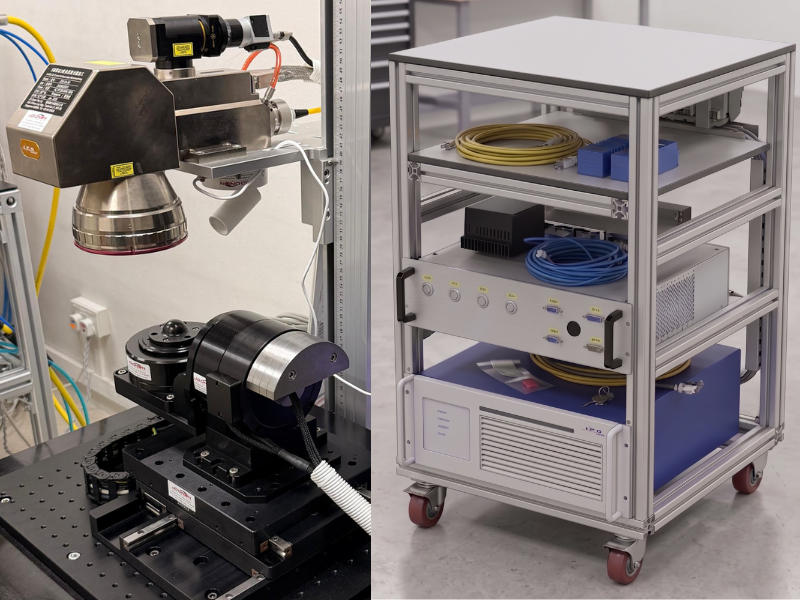
To support the integration of advanced laser sub-systems and establish a mobile testing environment, I engineered a custom Movable Laser Workstation from the ground up using SolidWorks.
- Complex Assemblies: Designed a highly rigid 5-tier structural chassis utilizing 4040 HFS aluminum extrusions (8mm slot width). The assembly was heavily constrained to ensure absolute squareness and isolate vibrations.
- Payload Integration: Specifically dimensioned the internal shelving to securely house an IPG Ytterbium Fibre Laser, a dedicated laser chiller, and a NANIO Air Power Supply, ensuring optimal thermal dissipation and cable routing.
- Dynamic Stability: Selected and integrated compact caster adjusters equipped to safely withstand and distribute dynamic loads exceeding 250kg across the chassis footprint.
Interactive Mechanical Architecture: 5-tier workstation designed with strict clearances for IPG laser hardware and constructed from 4040 aluminum profiles for maximum rigidity. Drag to rotate, scroll to zoom.
Design for Manufacturability (DFM)
Creating a 3D model is only half the engineering process; the design must be executable. I managed the transition from digital assembly to physical fabrication.
- 2D Engineering Drafting: Generated comprehensive manufacturing drawings complete with plan, front, right, and isometric views using standard 3rd angle projection.
- Hardware Specification: Defined exact hole patterns, 3mm structural fillet tolerances, and specified M6x16 countersunk hex screws for the custom laser head base top-plate.
- Technical Procurement: Managed supplier liaison by translating these precise CAD specifications to overseas fabrication partners via Taobao, ensuring accurate CNC machining and minimizing spare part holdings through standardized 40S aluminum brackets.
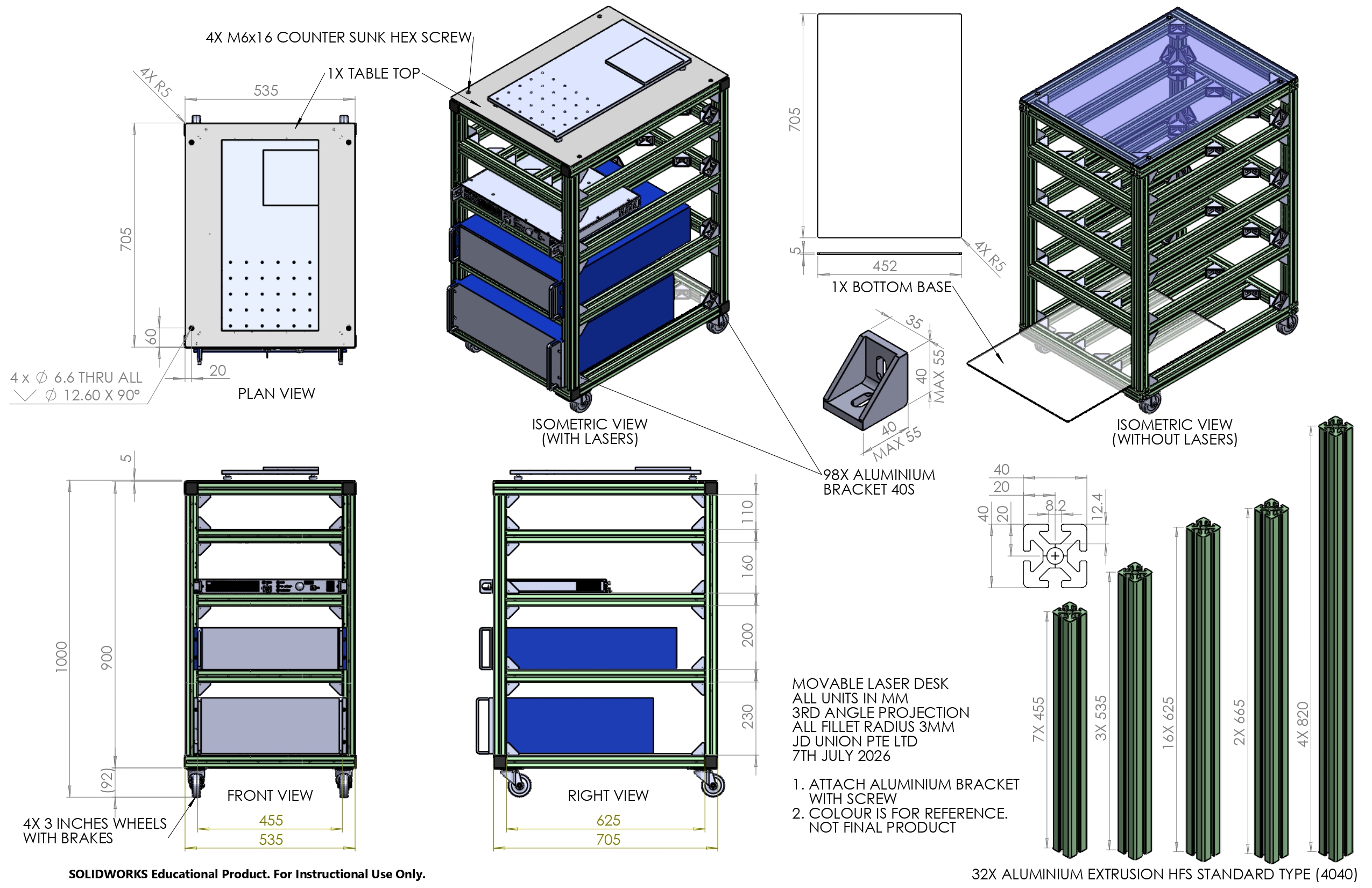
DFM Execution: Complete 2D drafted specification for the workstation. Accurately defining these tolerances was critical for seamless overseas CNC fabrication and assembly.
Ongoing: Laser Operations & Quality Control
Operating high-power industrial lasers requires zero margin for error. Beyond mechanical design, I actively participated in the testing, logistics, and quality assurance of the laboratory's optical hardware.
- Laser Calibration: Set up and safely tested Class 4 industrial lasers (LUXINAR E25-9.3 CO2 and GLPN-500-12-75M) under strict laboratory safety protocols.
- Microscopic Inspection: Conducted critical quality control on fragile Quartz Block Head (QBH) fiber optic connectors using a monocular microscope, inspecting for micro-contaminants that could cause catastrophic window failure.
- Logistics: Coordinated the physical packaging and international RMA logistics for high-value optical hardware, calculating volumetric costs and ensuring safe transit to regional offices.
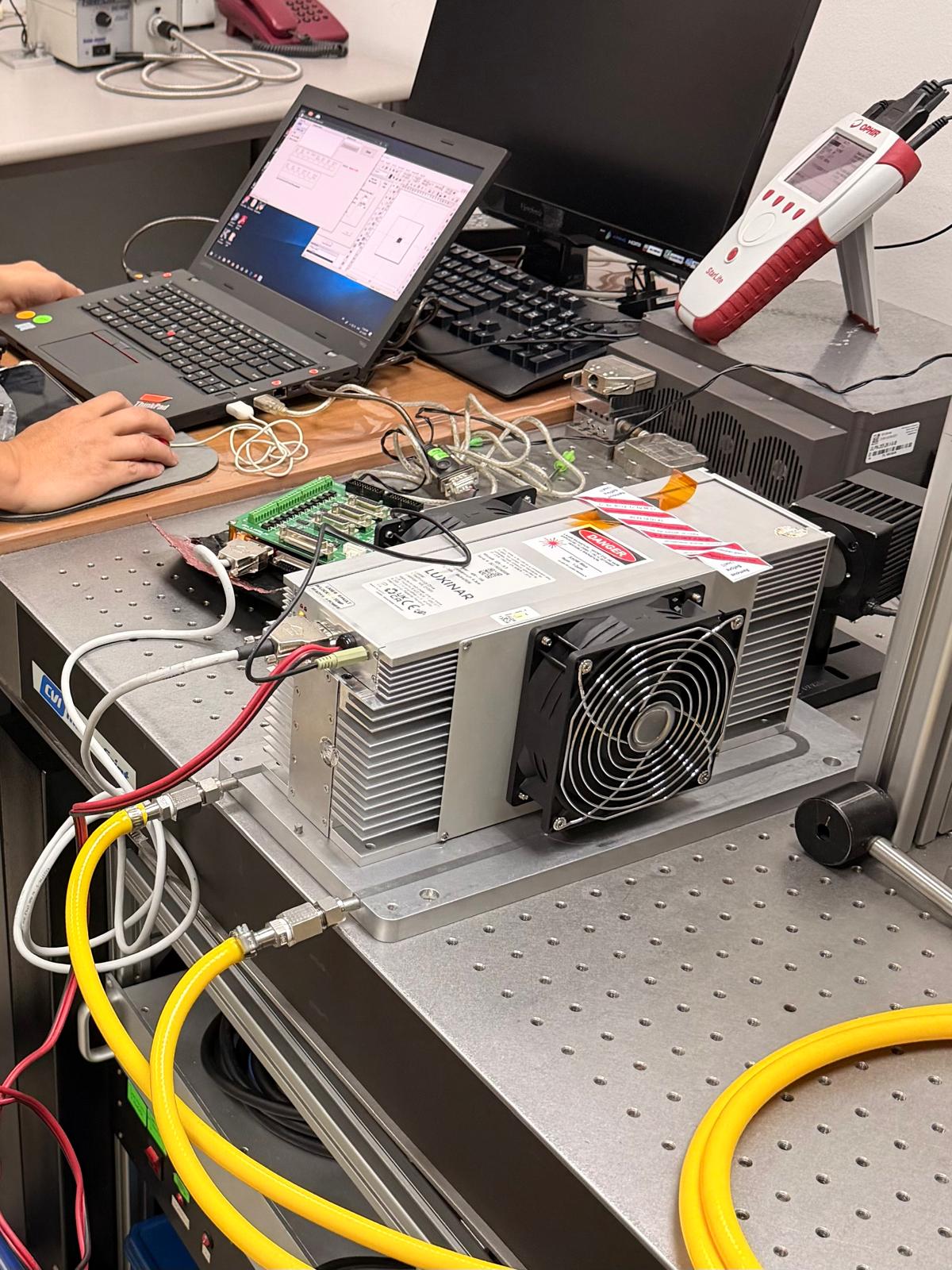
Controlled Laser Operation: Testing the LUXINAR E25-9.3 CO2 industrial laser with integrated power measurement, demonstrating strict adherence to Class 4 safety protocols.
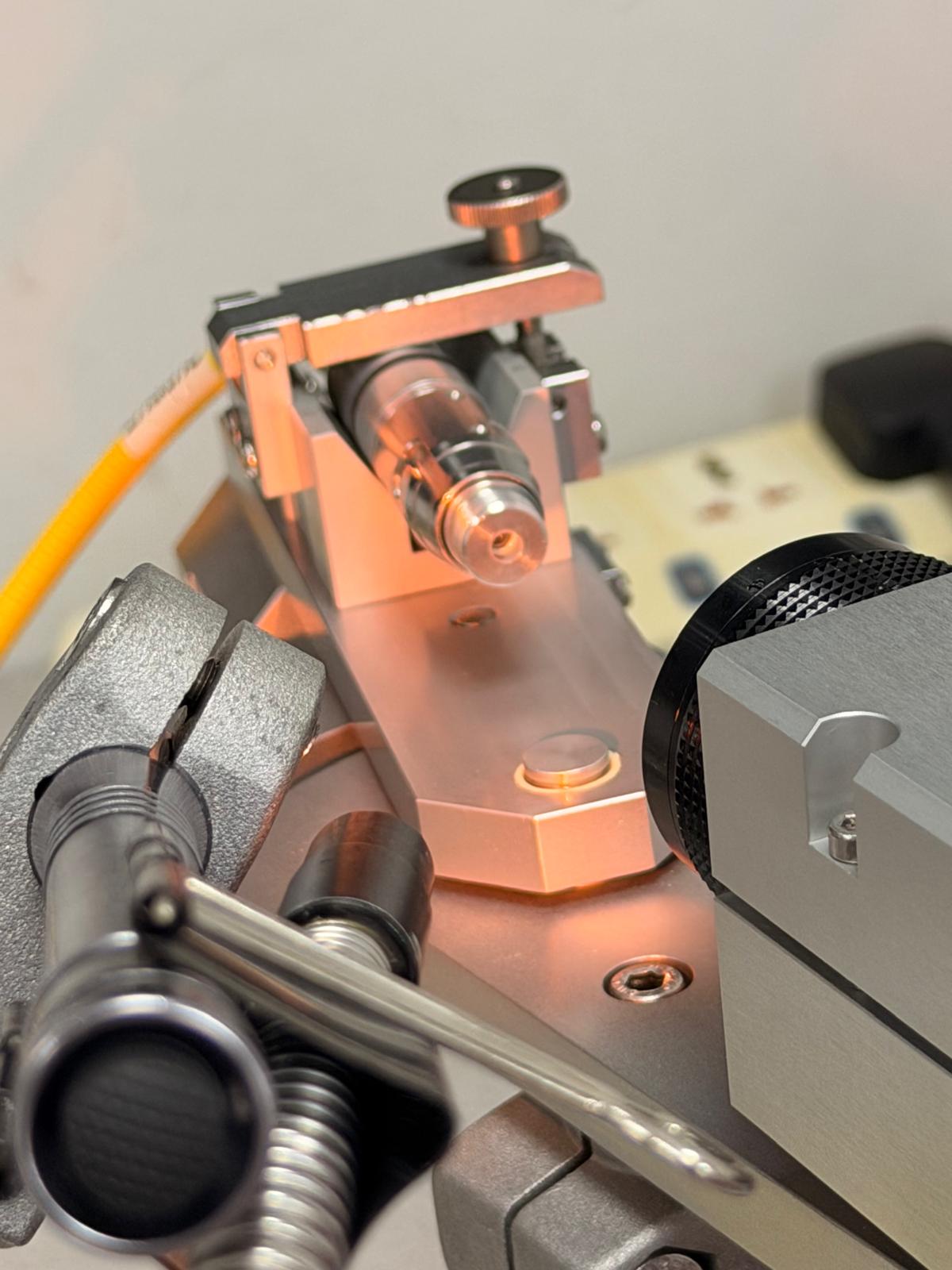
High-Power QC: Microscopic inspection of high-value Quartz Block Head (QBH) fiber optic connectors, a critical quality check to prevent catastrophic window failure.
Systems-Level Thinking
This experience reinforced the absolute necessity of systems-level engineering. By owning the physical design process—from conceptualizing SolidWorks models and executing strict DFM drafting, to conducting QC on fragile optical fibers—I proved that I understand how the mechanical environment dictates the performance of the entire machine. By building robust, precisely toleranced physical foundations, I directly enabled the successful integration of our control software.